Painters choose between a sprayer, a roller and a brush by the surface, not by habit. A sprayer covers large, plain areas fast and evenly. A roller works the paint into walls and weatherboards. A brush does the edges, the trims and the detail that a sprayer can't reach cleanly. On most house repaints, painters spray or roll the large areas and brush the rest. This page explains what each method is good at, what back-rolling is, and what to ask a painter who wants to spray your house. For the full job, see house repaints in Auckland.
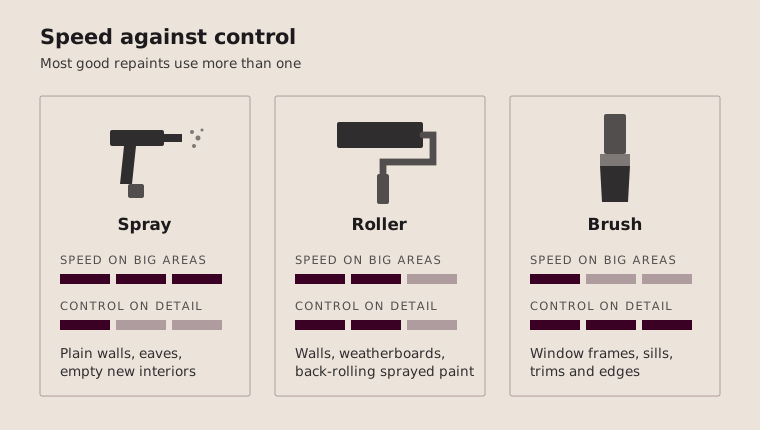
Speed against control: spraying is fastest on big plain areas, brushing gives the most control on detail, and rolling sits in between.
Is it better to spray or brush a house?
Neither is better everywhere. Spraying is quicker on large plain surfaces such as modern cladding, eaves and new interiors, and gives an even finish without brush marks. Brushing and rolling put the paint into the surface more firmly and suit weatherboards, trims and older timber. Most good repaints combine the two, chosen wall by wall.
Where a sprayer works well
- Large plain walls and modern cladding
- Eaves, soffits and ceilings
- Empty new-build interiors
- Fences and screens with many slats
- Jobs where speed matters and masking is simple
Where a brush and roller work better
- Weatherboards on older houses
- Window frames, sills and door trims
- Occupied houses with furniture inside
- Windy sites and close neighbours
- Anywhere with lead paint underneath
What is back-rolling and why does it matter?
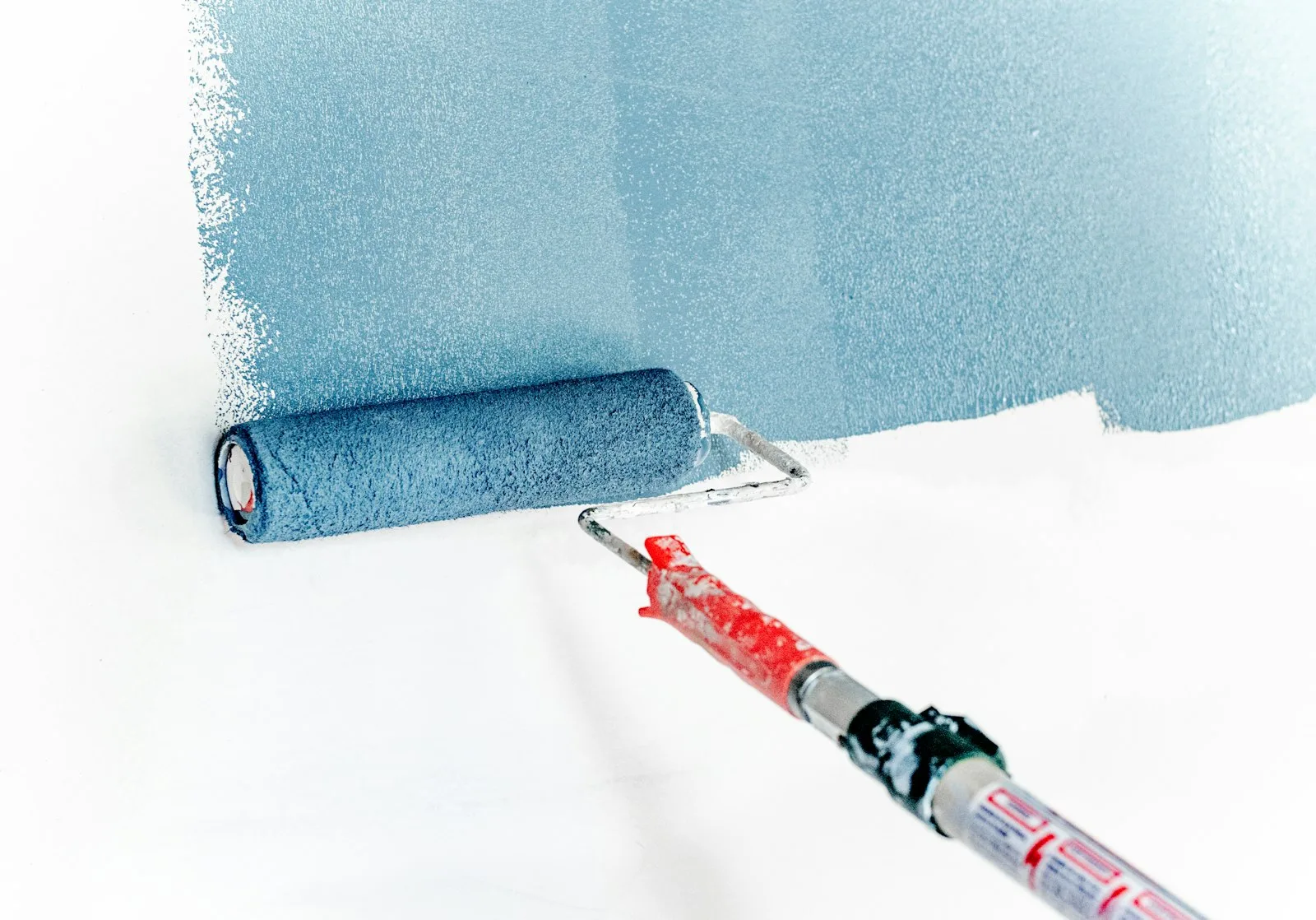
Back-rolling means running a roller over sprayed paint while it is still wet. It presses the paint into the surface, evens out the coat and fills small gaps that spray can miss, such as the lap edges of weatherboards. Many painters back-roll sprayed walls on exteriors. Resene's product information for one of its spray-grade paints says back-rolling as you go is an option where the job calls for it.
What are the risks of spraying a house?
The main risk is overspray: fine paint mist drifting on the wind onto cars, windows, roofs, plants and the neighbours' property. Spraying needs everything that isn't being painted to be masked, and calm weather. A sprayed coat can also be thinner than it looks if it is not applied evenly, which is one reason many painters back-roll.
Preparation is the same whichever method is used: washing, sanding, filling and priming come first. Spraying does not save time on the preparation, only on putting the paint on.
Should you spray paint over lead paint?
Spraying new paint over sound, well-prepared lead paint is not the issue. Preparing it is. Health New Zealand advises presuming lead in paint on buildings from the 1980s or earlier, and BRANZ advises against power sanding, dry abrasive blasting, water blasting and open flames on lead paint. A painter who sprays still has to prepare a lead-painted surface by hand, with wet methods.
Is spraying cheaper than brushing?
Not always. Spraying saves time on large plain areas, but masking windows, roofs and gardens takes time too, and the preparation is the same. On a house with lots of trims and small areas, brushing and rolling can work out about the same. Ask for a fixed price for the whole job rather than choosing on method.
FAQs
Can you spray paint the inside of a house?
Yes, and it suits empty rooms best, such as new builds or before people move in. Everything that isn't being painted, including floors, windows and fittings, has to be masked. In a lived-in home, most painters roll the walls and brush the trims, because masking furniture and protecting the rooms takes longer than it saves.
Does sprayed paint last as long as brushed paint?
It can, if the coat is applied at the right thickness and the surface is well prepared. A coat that is sprayed too thin wears through sooner. That is why many painters back-roll sprayed walls and use two full coats. Ask how many coats are included and whether sprayed areas are back-rolled.
What should I ask a painter who wants to spray?
Ask which parts of the house will be sprayed and which brushed, how windows, roofs, cars and gardens will be masked, what happens if the wind picks up, whether sprayed areas are back-rolled, and how many coats are included. A painter who has thought this through will answer without hesitation.
Do I need to warn my neighbours before spraying?
It is a good idea. Overspray can drift onto a neighbour's car, house or washing on a windy day. Most careful painters ask neighbours to move cars, choose calm days and mask fences and boundaries. Let your neighbours know the dates so they can plan around the work.